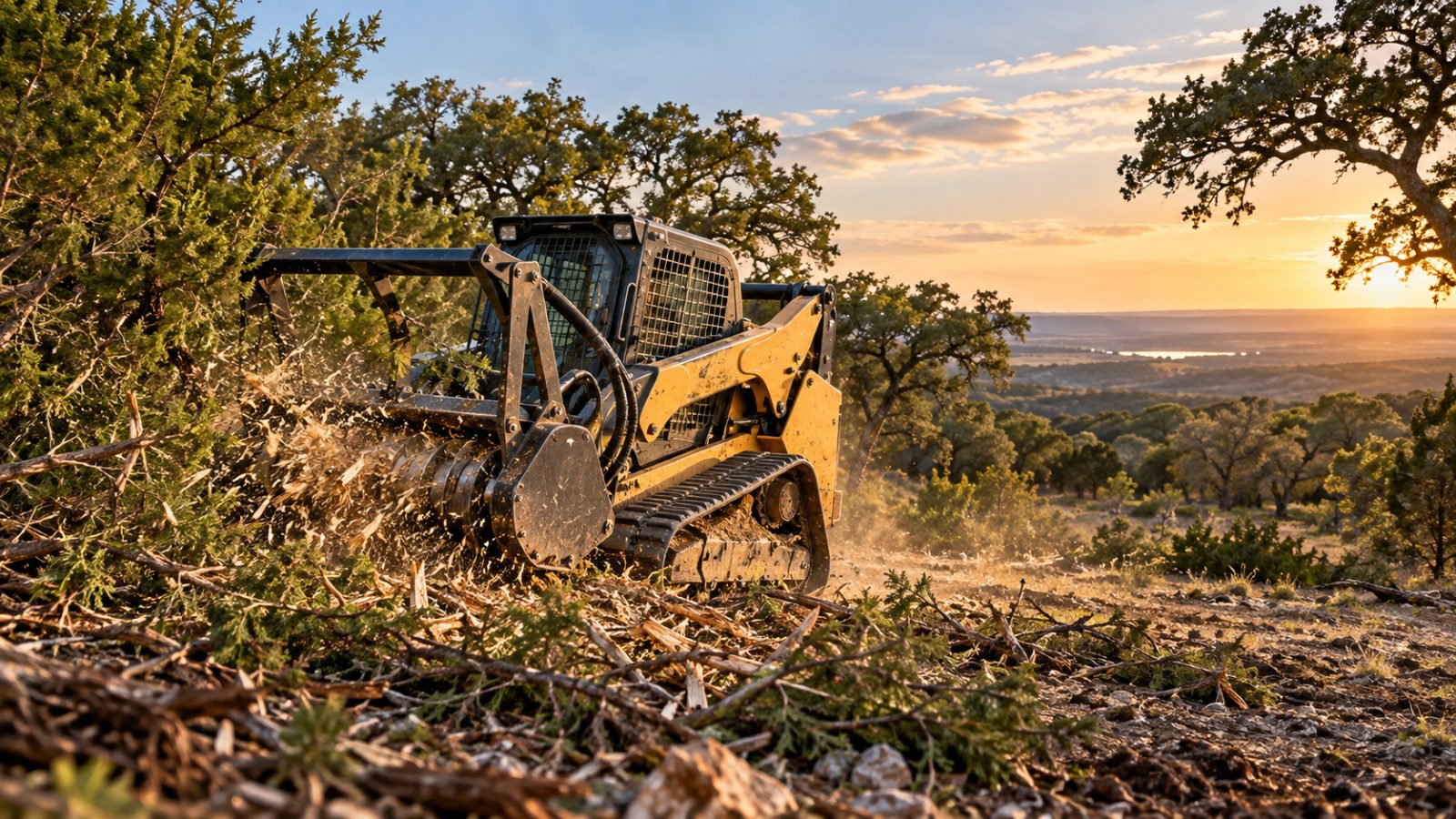
Professional Brush Clearing
Brush Clearing Services in Fort Worth, TX
Make your overgrown land accessible and useful again. Get a Free Estimate
Unwanted brush can turn open land into a difficult area to access and maintain. Around Fort Worth, cedar, mesquite, thorny shrubs, vines, and volunteer trees often spread through residential lots and rural acreage. Our brush clearing service focuses on reducing that unwanted vegetation so property owners can regain visibility, improve access, and manage their land more effectively.
We help customers plan projects ranging from concentrated vegetation removal to larger clearing areas. Before recommending an approach, we discuss the vegetation, ground conditions, access routes, and the parts of the property that should remain protected.
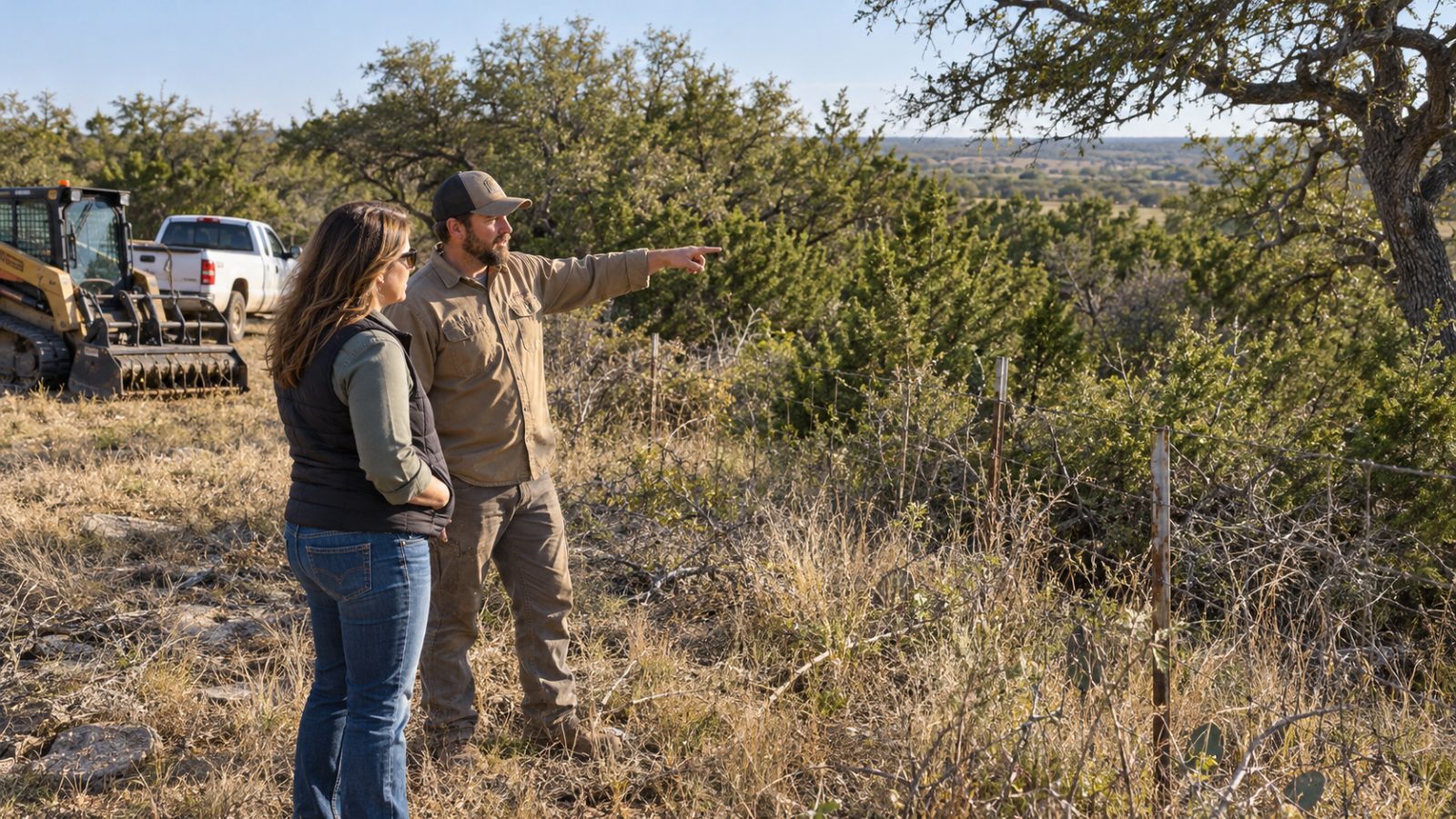
Brush clearing reduces unwanted surface vegetation in designated sections of a property. It can improve walking access, open previously obstructed areas, make fencing easier to inspect, and prepare land for ongoing maintenance. Some projects require selective removal around mature trees.
Others involve opening larger areas that have become overgrown with woody vegetation. The approach depends on the size and type of plant material, equipment access, and the desired finished condition.
Cedar, mesquite, thorny shrubs, vines, and volunteer trees are common concerns on North Texas properties. When vegetation is left unmanaged, it can spread through open sections and form thick areas that are difficult to walk or mow.
Heavy brush may conceal rocks, discarded wire, drainage features, fallen limbs, or uneven ground. Identifying these conditions helps determine how the work should proceed and whether any additional preparation is necessary.
The appropriate method depends on the vegetation and the customer's goals. Some sites benefit from mechanical clearing, while others require selective work because of trees, fencing, structures, or limited access.
Brush clearing does not automatically include stump excavation, complete root removal, major grading, or construction preparation. We explain the scope and expected result so owners can make informed decisions.
Residential lots can become difficult to maintain when brush spreads around fences, beneath trees, and into unused sections of the property. Dense vegetation can hide uneven ground and make once-accessible spaces frustrating to enter. We discuss the areas you want opened and any existing features that should remain protected. The clearing approach depends on equipment access, surrounding structures, vegetation density, and the desired finish. Some owners want to recover outdoor space, while others simply need to make a wooded section easier to inspect and maintain. We aim to define a practical scope that addresses the problem without unnecessary disturbance.
Larger properties often have several types of vegetation across different sections of land. Open pasture may border thick cedar, mesquite, or tangled undergrowth that has accumulated over many growing seasons. We help owners identify priority areas and consider how each section will be used after clearing. Access routes, slopes, rocks, fence lines, and material handling all affect the clearing plan. Rather than assume every acre needs the same treatment, we discuss targeted solutions that support property inspections, access, and routine maintenance. A clear project scope makes larger vegetation management work easier to understand.
Selective brush removal focuses on unwanted vegetation while preserving designated trees, screening, and natural property features. It may be appropriate when a landowner wants better visibility or access without converting an entire wooded section into open ground. Identifying what should remain is an important part of planning. Equipment clearance, exposed roots, low branches, and nearby obstacles may limit how closely vegetation can be removed. We discuss those limitations before beginning. The goal is to reduce problematic brush while keeping the features that matter to the landowner.
Properties left unmanaged for several seasons may accumulate layers of shrubs, vines, volunteer trees, and fallen plant material. In heavy growth, debris and obstacles can remain hidden until the site is inspected more closely. Restoring access often begins with identifying the areas that need immediate attention. Brush clearing can help reveal the underlying land and make future upkeep easier. Trash removal, demolition, hazardous material handling, extensive grading, and stump excavation are separate activities that should be discussed if needed. We focus on defining the vegetation work clearly so the owner understands the scope.
| Service | Estimated Cost | Average |
|---|---|---|
| Light Brush Clearing | Custom estimate | Varies by vegetation |
| Dense Brush Clearing | Custom estimate | Varies by density |
| Residential Lot Clearing | Custom estimate | Varies by site conditions |
| Rural Acreage Clearing | Custom estimate | Varies by acreage and access |
No fixed prices or market averages are represented here. Actual costs depend on vegetation type, density, terrain, equipment access, and the agreed work scope.
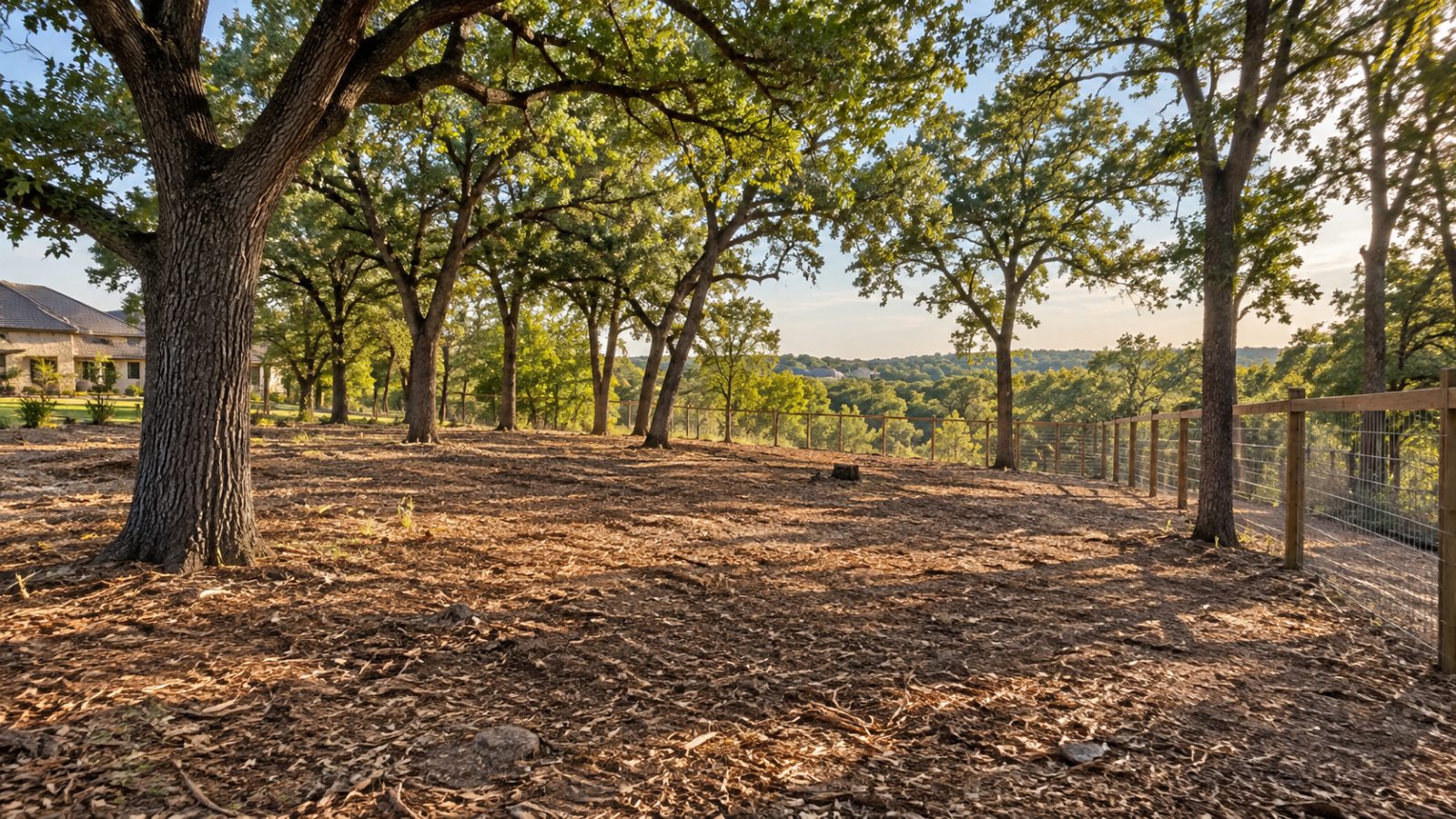
Our work centers on practical solutions for unwanted brush and overgrowth.
We discuss the areas to clear and the features that should remain.
We consider access, terrain, and plant size before selecting a clearing approach.
We explain what is included and which conditions may require additional work.
Need brush clearing in Fort Worth or surrounding North Texas? Request a project estimate.
Free — no obligations
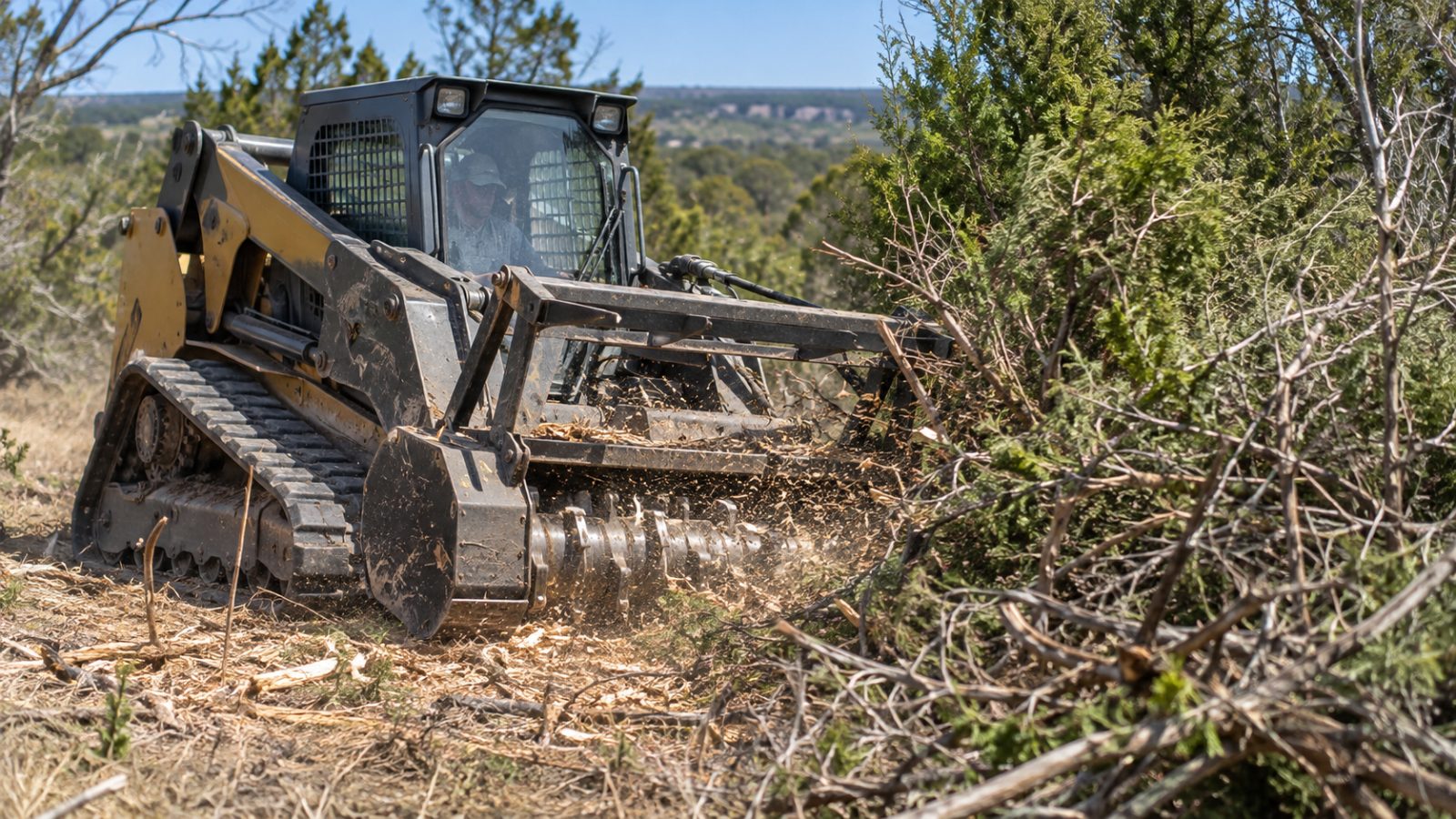
Tell us the location, approximate size, vegetation, and your reason for clearing.
We consider terrain, equipment access, dense growth, obstacles, and features to preserve.
We discuss the proposed method, clearing boundaries, material handling, and expected finished condition.
Work proceeds within the agreed areas and according to the practical limitations of the property.
We review the finished area and discuss future vegetation maintenance where appropriate.