On-Site Vegetation Mulching
Brush Mulching Services in Fort Worth, TX
Reduce overgrowth and improve access with practical mulching. Get a Free Estimate
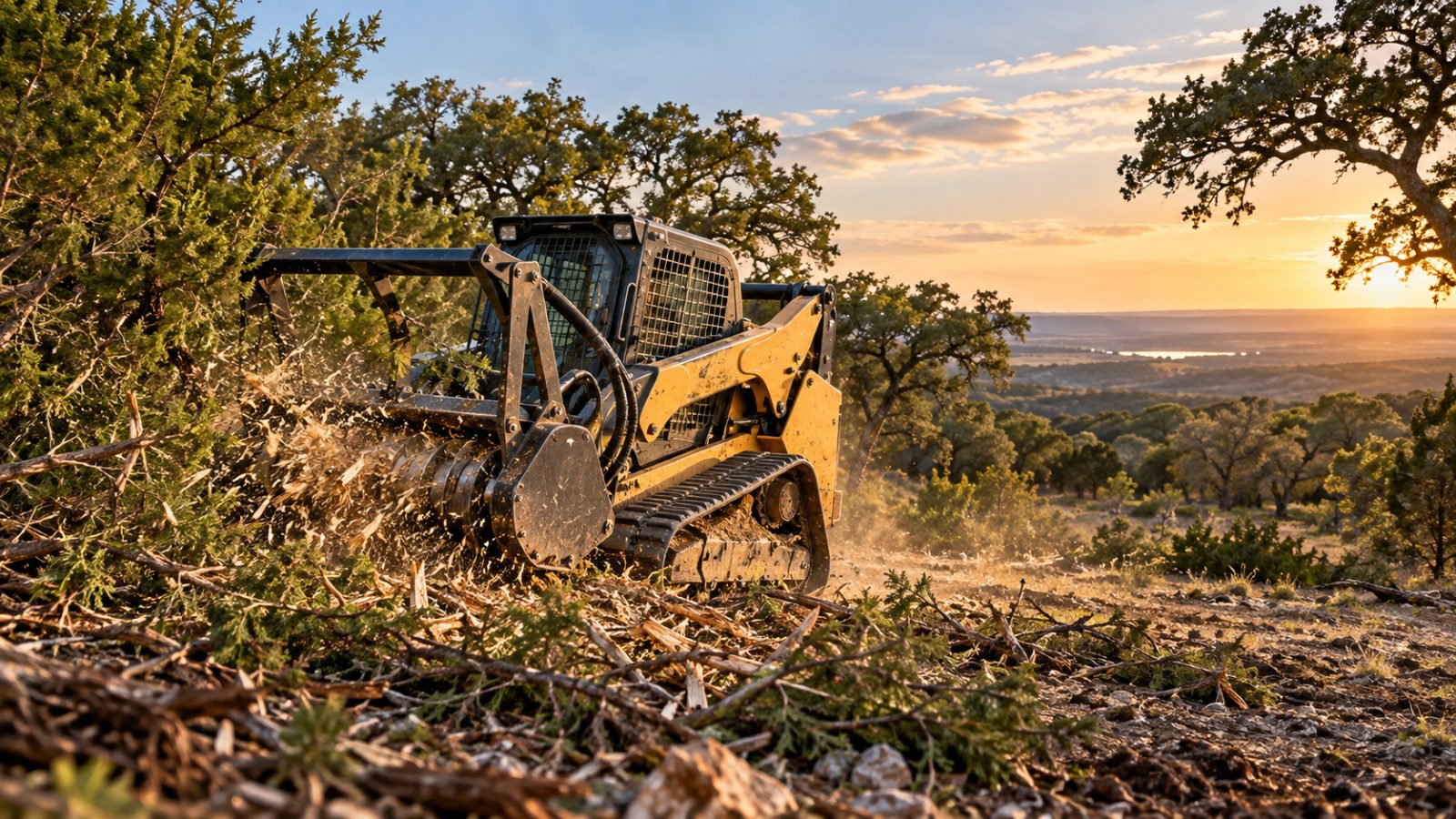
Brush mulching is a practical vegetation management option for properties with suitable shrubs, small woody plants, and dense undergrowth. Specialized equipment processes vegetation into smaller pieces that can remain on the property, reducing the need to collect and transport every cut branch.
Brush Clearing Fort Worth helps landowners determine whether mulching fits their property and goals. We consider vegetation size, terrain, access, and how the finished area will be used. Mulching can be useful for opening wooded lots and rural acreage, but it is important to understand the limitations before work begins.
Brush mulching uses mechanical equipment to break suitable surface vegetation into smaller organic material. Depending on the machine, stem size, and site conditions, brush can be processed near where it grows rather than being completely removed from the property.
This can simplify vegetation management for owners who want to reduce undergrowth while leaving some organic ground coverage. The amount of material remaining depends on the volume and type of plants being processed.
Mulching is worth considering when the goal is reducing suitable brush, opening access through wooded sections, or improving visibility around established trees. It may also help manage unwanted vegetation on rural acreage and along selected property access routes.
The method is not appropriate for every situation. Large trees, heavy stumps, buried debris, difficult slopes, and certain sensitive areas can require other approaches.
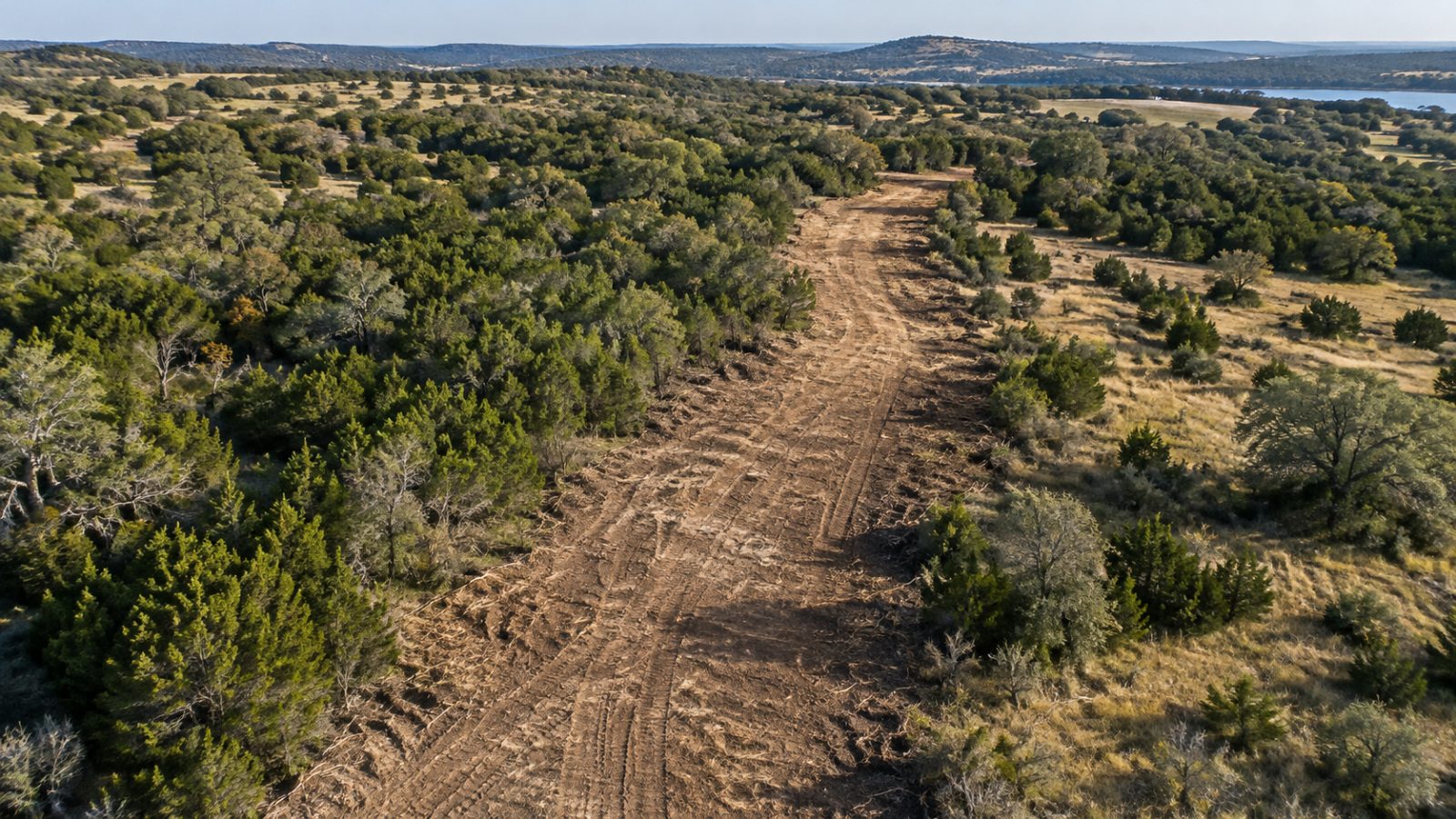
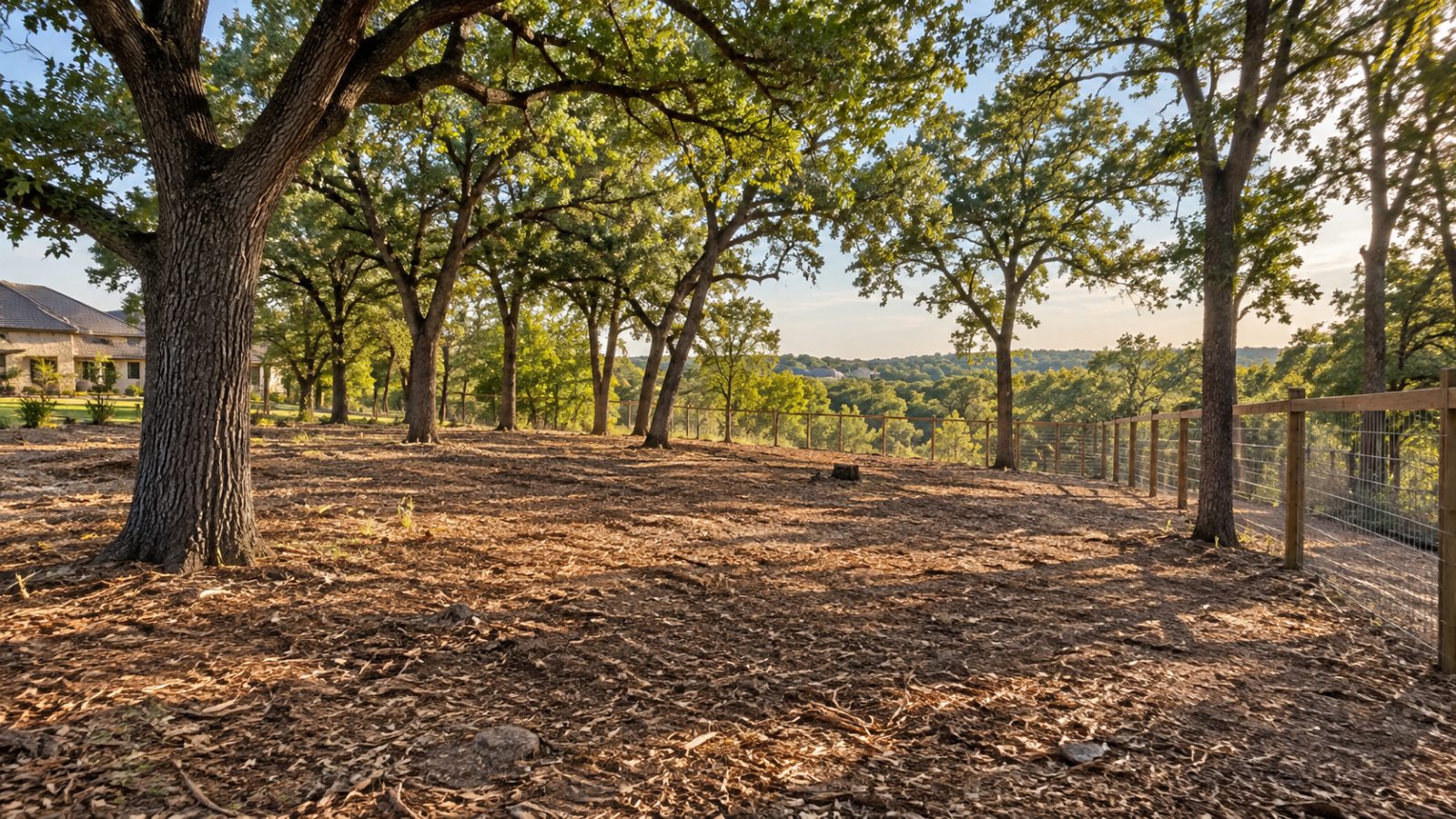
Processed organic material commonly remains on the ground. Root systems, larger stumps, and some woody remnants may also remain unless other work is agreed upon. The finished area is different from a graded or landscaped surface.
Mulching does not automatically create a finished driveway, building pad, or mowing-ready lawn. We explain this distinction so the outcome matches the landowner's intentions.
Wooded lots may contain mature trees surrounded by thick shrubs, vines, saplings, and other unwanted growth. Brush mulching can be considered for reducing suitable lower vegetation while preserving selected larger trees. The work should be planned around access routes, exposed roots, low branches, and nearby structures. We discuss what the owner wants the wooded area to look like afterward. Some want more open walking space, while others simply need enough vegetation reduced to inspect and maintain the land. Mulching can help with these goals when the property and plant material are suitable, but the remaining organic material and ground conditions should be considered.
Rural acreage often contains patches of woody growth that spread into previously accessible areas. Mulching may help manage suitable brush without requiring complete removal of every processed branch and stem. It can be especially useful when the owner's priority is improving access or reducing surface overgrowth. Acreage alone does not determine the amount of work. Brush density, terrain, stem size, and equipment access influence the plan. We help owners identify priority sections and understand the expected finish so the work supports their property maintenance goals.
Thick undergrowth can form a tangled layer beneath larger trees and along wooded property edges. It may contain vines, shrubs, small woody stems, and plant material that interferes with walking or inspection. Mulching can reduce suitable vegetation where equipment access allows. We consider nearby trees, concealed obstacles, and the owner's preservation priorities. The goal is not necessarily to remove the entire wooded area. It is to reduce the selected lower vegetation and improve usability while recognizing that mulch, root systems, and some natural features may remain.
Some landowners want to open a route through overgrown vegetation rather than clear a large area. Brush mulching may be suitable for selected walking paths, property inspection routes, or access corridors where the terrain and vegetation allow safe equipment use. The width, turns, slope, and intended use should be discussed in advance. A mulched access corridor is not automatically suitable for frequent vehicle traffic or wet-weather driving. Additional grading, stabilization, or surface construction may be necessary if the owner needs a finished roadway.
| Service | Estimated Cost | Average |
|---|---|---|
| Light Undergrowth Mulching | Custom estimate | Varies by area |
| Dense Brush Mulching | Custom estimate | Varies by vegetation |
| Wooded Lot Mulching | Custom estimate | Varies by access |
| Acreage Mulching | Custom estimate | Varies by site conditions |
Costs require a property-specific estimate. Vegetation density, stem size, terrain, access, and the desired finished condition determine the scope.
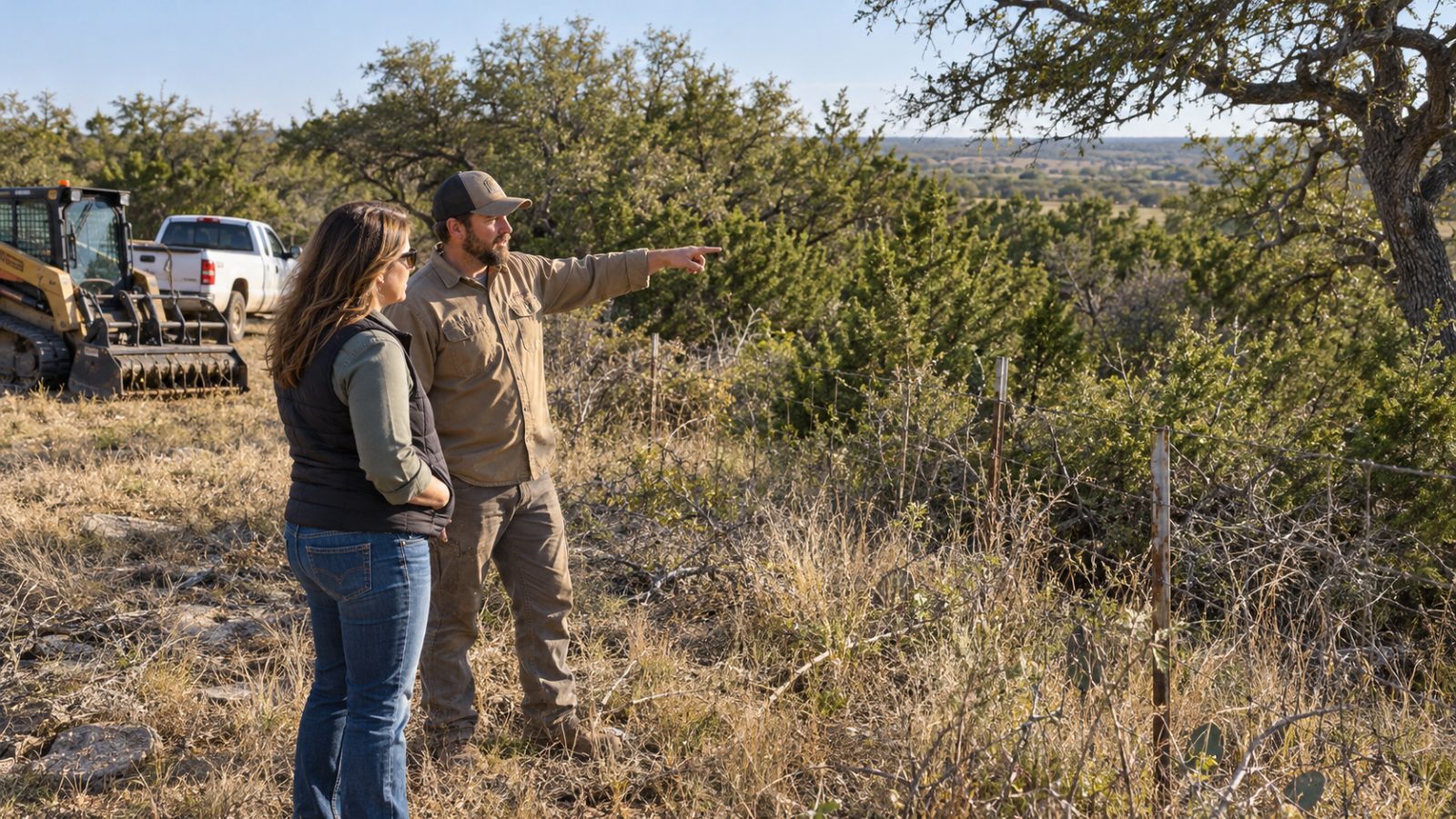
We assess whether mulching makes sense for the vegetation and property.
We discuss designated trees and natural features to preserve before defining the clearing area.
We explain remaining mulch, roots, and stumps where relevant.
We account for cedar, mesquite, woody undergrowth, rocks, and local terrain.
Thinking about brush mulching? Tell us about your North Texas property and request an estimate.
Free — no obligations
Tell us what vegetation needs attention and how the property will be used.
We consider plant size, density, equipment access, and potential obstacles.
We establish the mulching boundaries, preservation priorities, and expected finish.
Vegetation is mulched within the agreed scope using an appropriate approach.
We discuss remaining material and future vegetation maintenance.