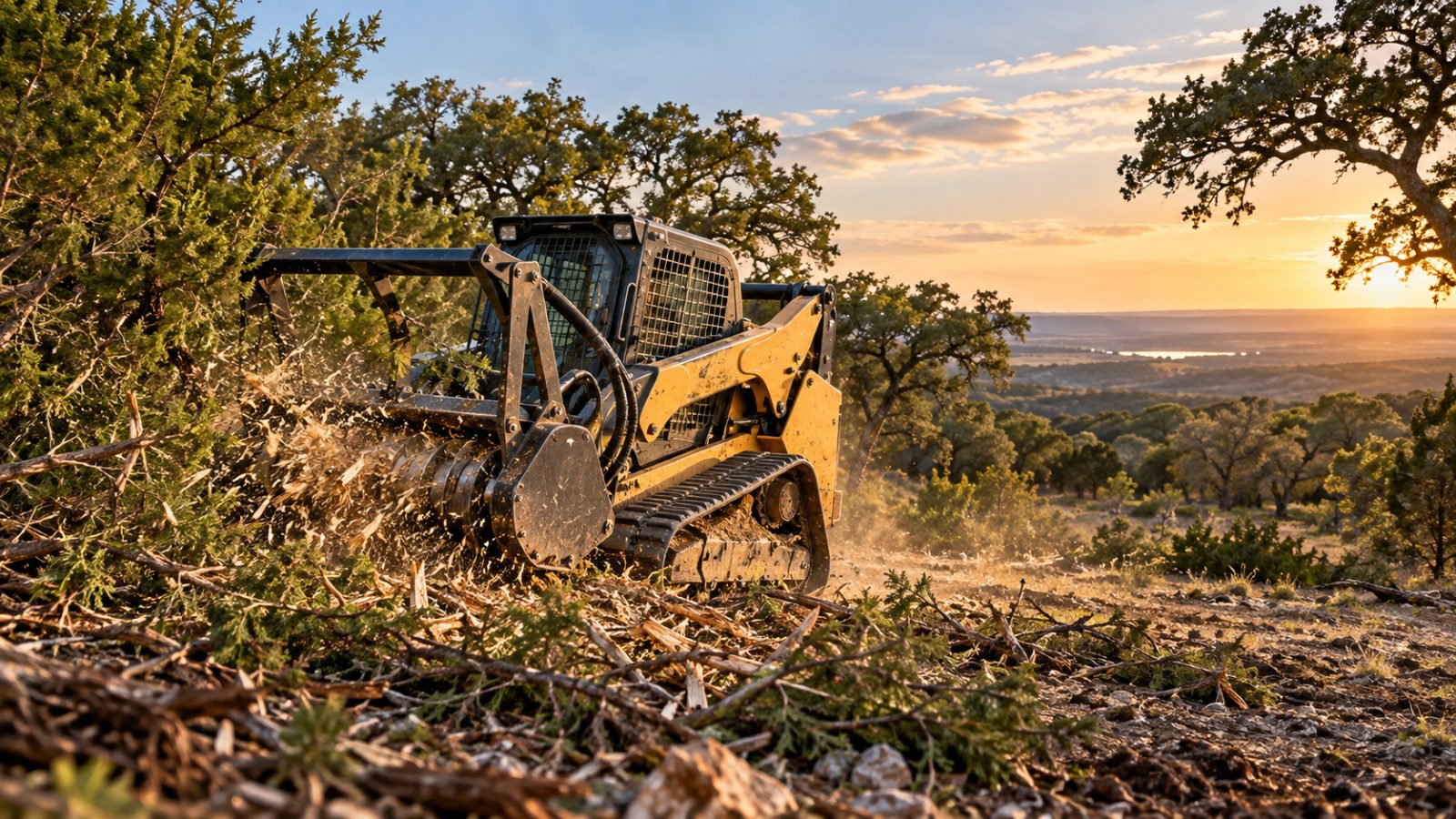
Property Boundary Vegetation Clearing
Fence Line Clearing in Fort Worth, TX
Open overgrown fence lines and make maintenance easier. Get a Free Estimate
A fence line can become difficult to inspect when shrubs, vines, cedar, mesquite, and volunteer trees grow against posts and wire. Thick vegetation may conceal damaged sections, prevent access to gates, and make routine boundary maintenance frustrating. Brush Clearing Fort Worth helps residential and rural property owners clear unwanted vegetation along designated fence lines.
Whether you need a short residential fence cleared or a longer section across rural acreage, we start by reviewing access, vegetation, the existing fence, and any features that require protection. Our goal is to restore workable access while respecting the property boundary and surrounding land.
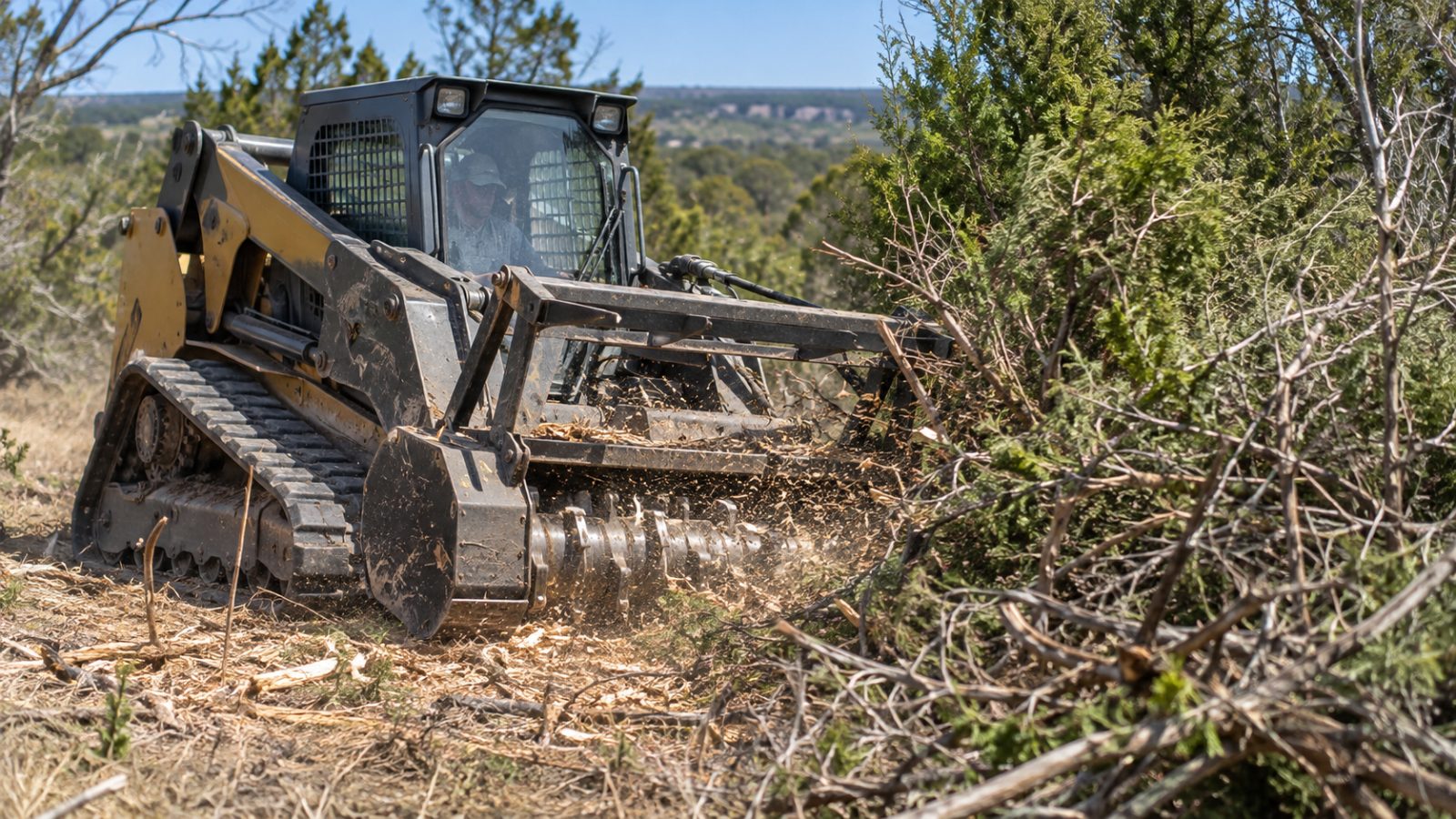
Overgrown vegetation can prevent owners from seeing the condition of posts, wire, gates, and other fencing components. Vines and woody growth may become tangled in the fence, making maintenance difficult. Thick brush can also hide fallen limbs, old wire, rocks, and debris along the property boundary.
Clearing designated areas beside the fence can improve visibility and provide room for inspections and repairs. The required width depends on the owner's maintenance needs, vegetation, and available equipment access.
Working near an existing fence requires attention to its condition. Loose wire, damaged posts, concealed hardware, and vegetation growing through the structure can affect how clearing is performed. We discuss these conditions before recommending a method.
Fence line brush clearing is separate from fence repair, replacement, or surveying. Owners should confirm property boundaries before work begins.
Rural properties may have long fence lines running through cedar, mesquite, brush, and areas of uneven terrain. Some sections can be easily reached while others involve slopes, drainage crossings, or narrow access points.
A project can focus on priority areas where vegetation interferes with maintenance or access. Clearing the entire property boundary may not always be necessary.
Woody vegetation can return through seedlings and existing root systems. Maintaining visibility may require periodic inspections and follow-up vegetation management.
A cleared fence line can make future property care easier, but it does not prevent every shrub or vine from growing back. The best maintenance plan depends on the location and condition of the fence.
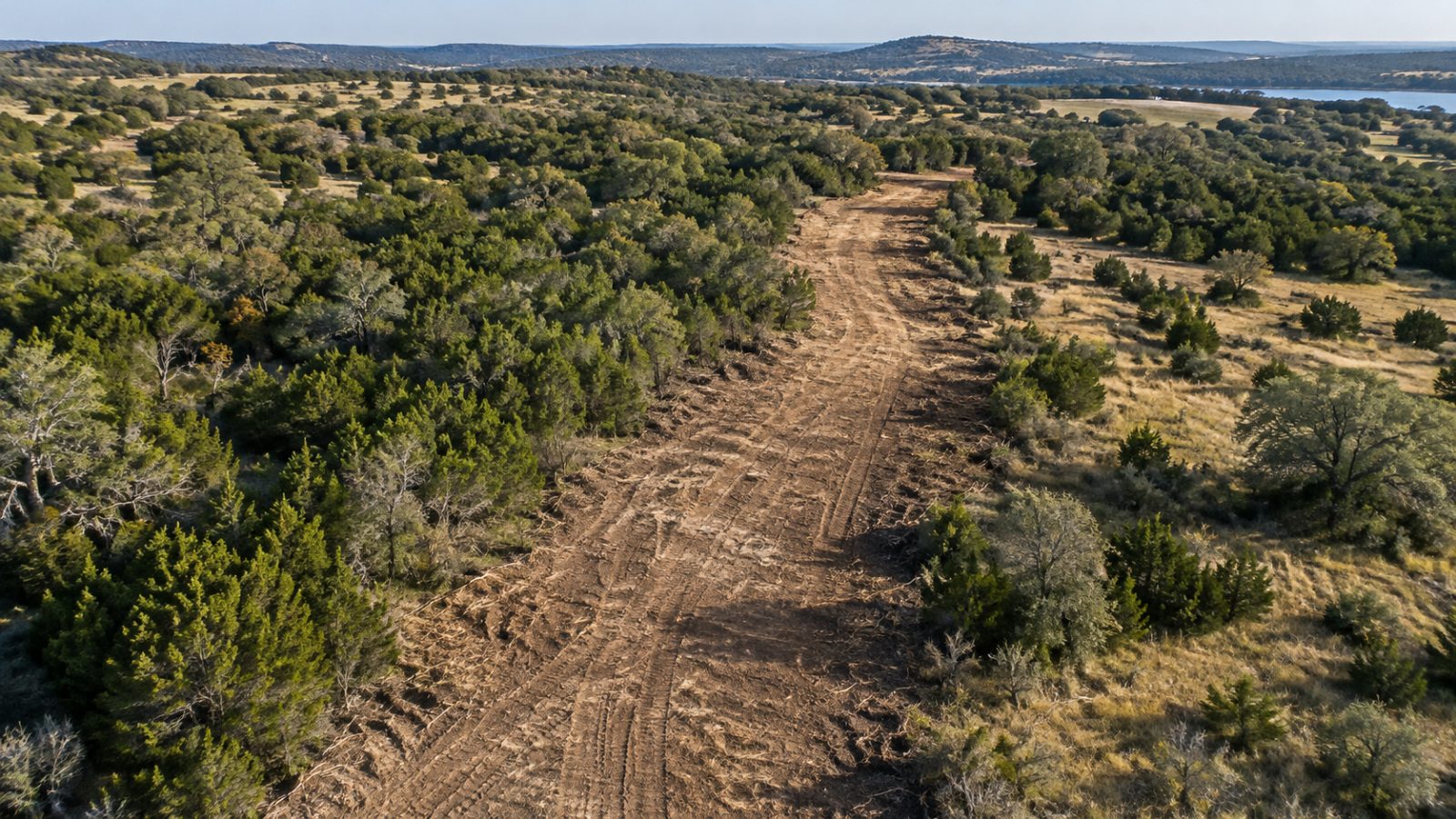
Long rural fences can run through uneven terrain, wooded sections, and dense brush. Overgrowth may make it difficult to inspect posts, reach corners, or identify damaged wire. Clearing selected sections can restore access for regular property maintenance and planned repairs. We consider equipment routes, slopes, vegetation density, and the condition of existing fencing. Old wire and concealed posts are especially important to identify before mechanical work begins. The project scope can focus on the areas where clearing will make the most practical difference to access and inspection.
Residential fencing may be surrounded by landscaping, neighboring structures, irrigation systems, and established trees. When brush spreads into narrow boundary areas, property owners may struggle to access the fence or maintain the ground around it. We discuss the available work space and the vegetation that needs attention. A selective approach may be needed where equipment access is restricted or plants are growing close to structures. The intended result is a more accessible boundary area, with clear expectations about what can be removed safely.
Brush accumulating around gates and access points can make it difficult to move through a property or inspect nearby fencing. Shrubs, vines, and small woody growth may obstruct the approach to gates or conceal the condition of surrounding ground. Clearing these areas can improve visibility and restore access where suitable equipment or methods can be used. We consider the condition of the gate, fence posts, buried obstacles, and surrounding terrain. Gate repairs, replacement hardware, and driveway construction are separate work unless specifically included in the agreed scope.
Some owners need a defined maintenance corridor along parts of their property perimeter. Vegetation management can help keep these areas visible and easier to inspect, particularly where brush has gradually spread toward existing fencing. We help identify the sections requiring attention and discuss how wide the cleared area needs to be for its intended use. Terrain, property boundaries, neighboring land, and existing infrastructure all affect what can be done. Periodic maintenance may be necessary as vegetation returns.
| Service | Estimated Cost | Average |
|---|---|---|
| Residential Fence Line | Custom estimate | Varies by length and access |
| Rural Fence Line | Custom estimate | Varies by terrain |
| Dense Boundary Brush | Custom estimate | Varies by vegetation |
| Gate Access Clearing | Custom estimate | Varies by obstacles |
Fence line clearing prices depend on linear distance, vegetation density, fence condition, terrain, and access. Estimates do not automatically include fence repair or replacement.
We discuss posts, wire, gates, and concealed obstacles before defining the clearing approach.
We encourage owners to confirm their boundary lines and the area where work is authorized.
We focus on clearing the areas needed for access and maintenance.
We consider cedar, mesquite, vines, woody shrubs, and uneven rural terrain.
Need overgrown fencing cleared in Fort Worth or nearby communities? Request a fence line clearing estimate.
Free — no obligations
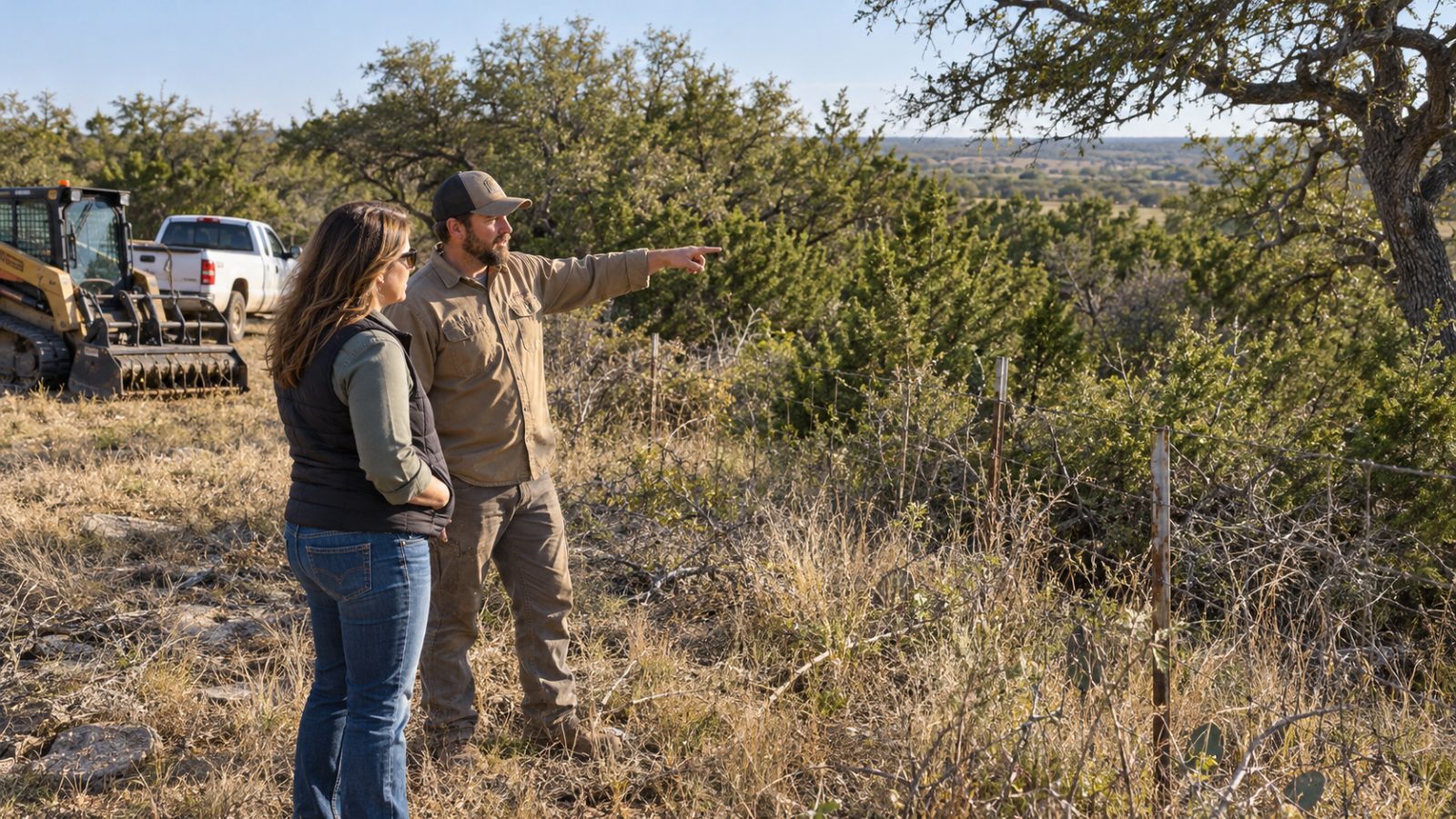
Tell us which fence lines or gates are overgrown and why access is needed.
We consider wire, posts, vegetation, terrain, and available equipment access.
The owner identifies the authorized work area and any features requiring protection.
Brush is addressed within the defined scope while accounting for existing fencing.
We discuss remaining obstacles and future vegetation management.