Mechanical Forestry Mulching
Forestry Mulching Services in Fort Worth, TX
Manage thick woody growth without automatically clearing every tree. Get a Free Estimate
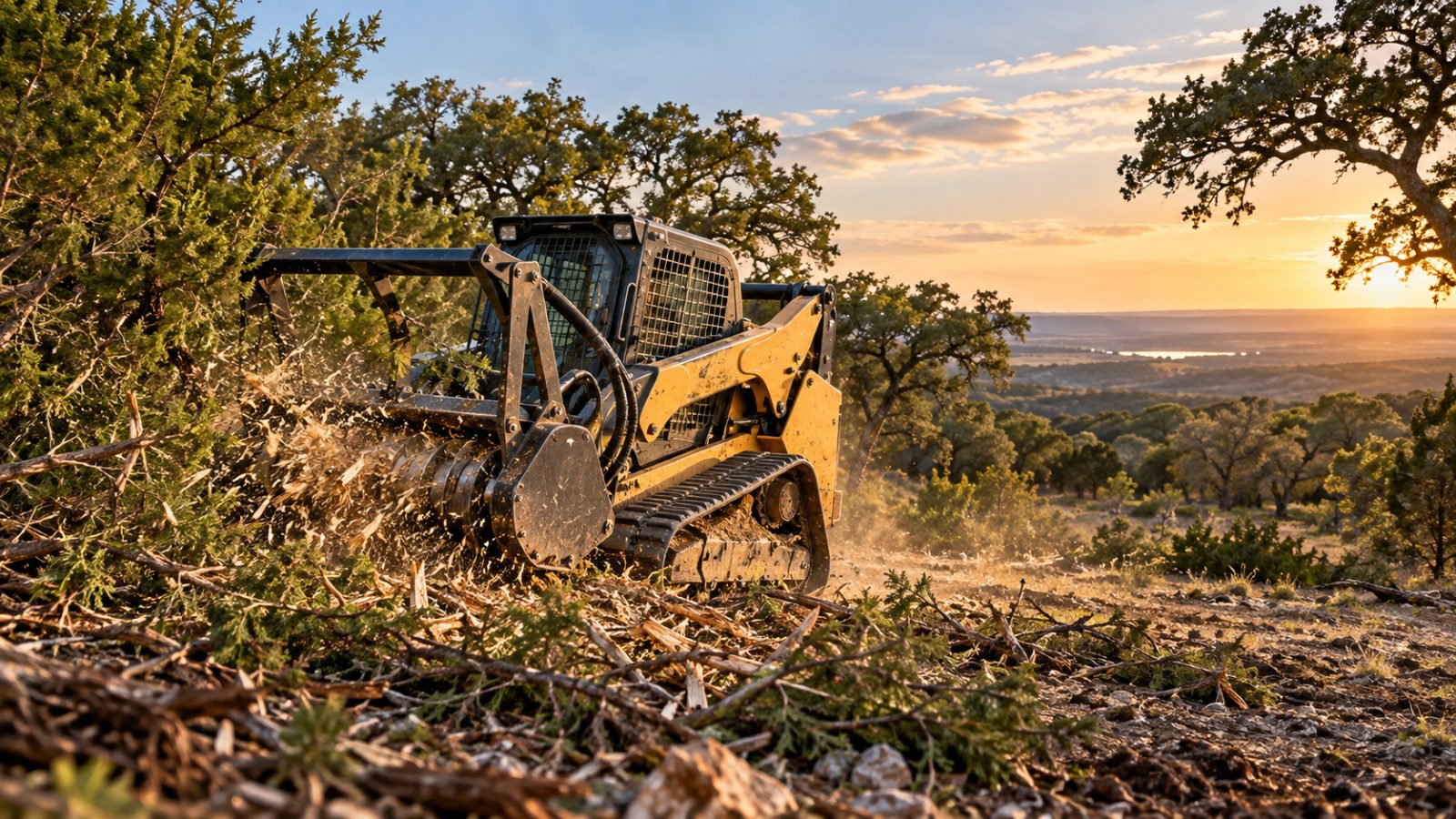
Forestry mulching is a mechanical vegetation management method that can help reduce dense woody growth on suitable wooded lots, rural acreage, and overgrown land. Specialized equipment processes shrubs, small trees, and other appropriate vegetation into mulch rather than requiring all material to be collected and transported away.
Brush Clearing Fort Worth approaches forestry mulching with attention to the property owner's goals, existing trees, vegetation size, and terrain. Some customers want to open access through wooded acreage, while others want to reduce lower growth around mature trees. We evaluate whether forestry mulching is suitable before defining the project scope.
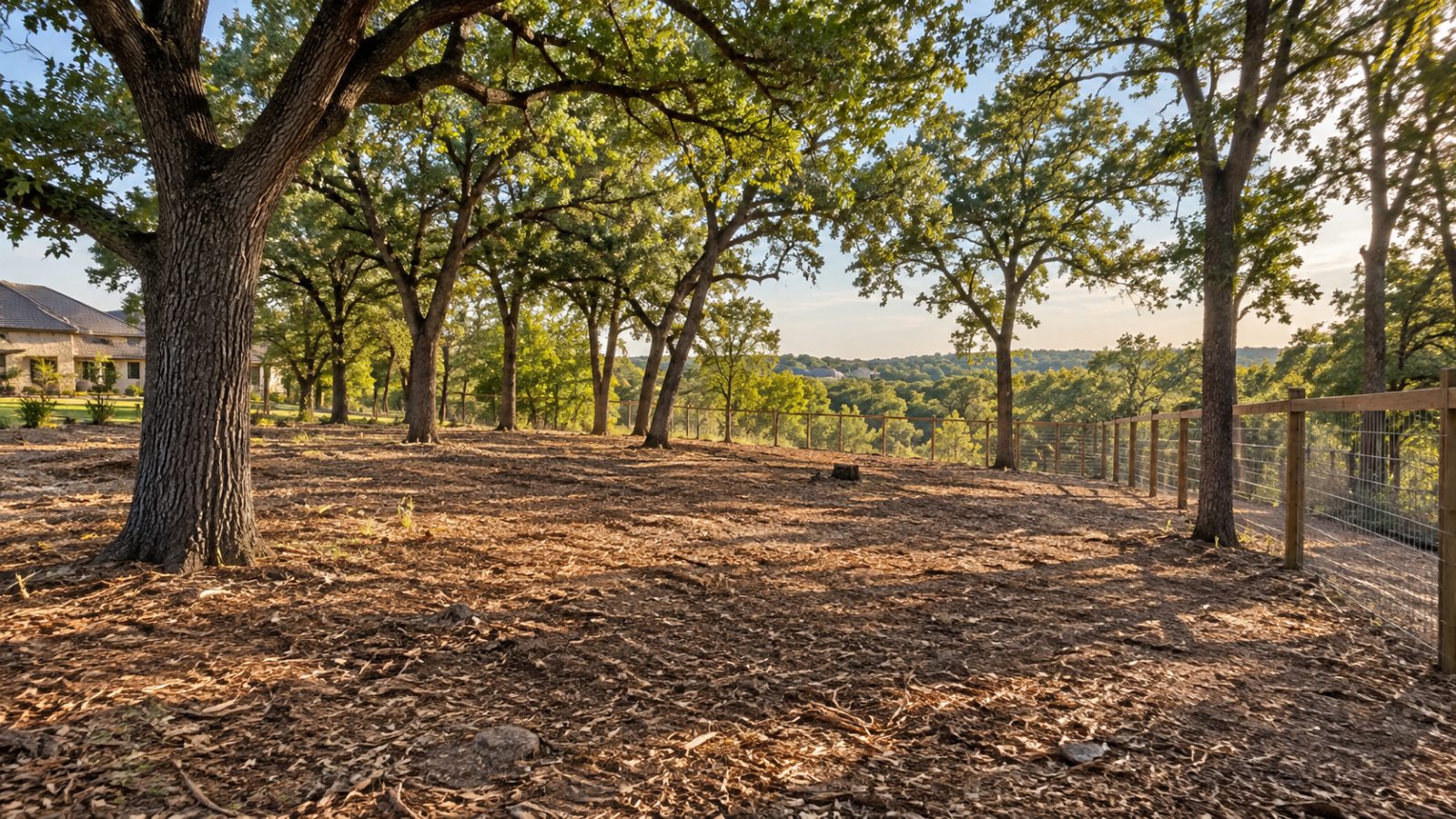
Forestry mulching uses purpose-built mulching attachments and equipment to process suitable woody vegetation. The cutting system breaks plant material into smaller pieces that can remain on the site as organic ground coverage.
The process may reduce the need for separate gathering and hauling of cut vegetation, depending on the project. The amount of mulch left behind varies according to vegetation density, stem size, and the level of processing.
One reason property owners consider forestry mulching is the ability to target certain layers of unwanted vegetation while retaining designated mature trees where conditions permit. This may be useful on wooded lots where dense undergrowth limits access and visibility.
Selective work requires attention to roots, trunks, low branches, rocks, and equipment clearance. Not every area beneath a mature tree can be reached without potential disturbance, so preservation priorities must be discussed during planning.
Large rural properties may contain cedar, mesquite, shrubs, and volunteer trees that spread into previously open sections. Forestry mulching may help manage suitable woody vegetation and reopen selected areas for inspection or maintenance.
Terrain, slope, rocks, stem diameter, and equipment access affect the method. Projects should be scoped around the actual conditions rather than acreage alone.
Forestry mulching generally does not guarantee complete root removal, stump excavation, land grading, or a debris-free finish. Large trees and other material outside the equipment's capabilities may need separate work.
It is a vegetation management service, not a substitute for engineering or complete construction site preparation. Owners planning future buildings, roads, or other improvements should consider the additional work those projects may require.
Wooded acreage can contain thick lower vegetation beneath established trees and across areas that receive little maintenance. Forestry mulching may help reduce suitable brush and smaller woody growth while preserving designated larger trees. The objective is often to improve access and visibility without removing all vegetation. We review tree locations, undergrowth density, terrain, and available equipment routes. Each section may require a different approach depending on what the owner wants to retain. The remaining mulch and root systems should also be considered when planning future maintenance or improvements.
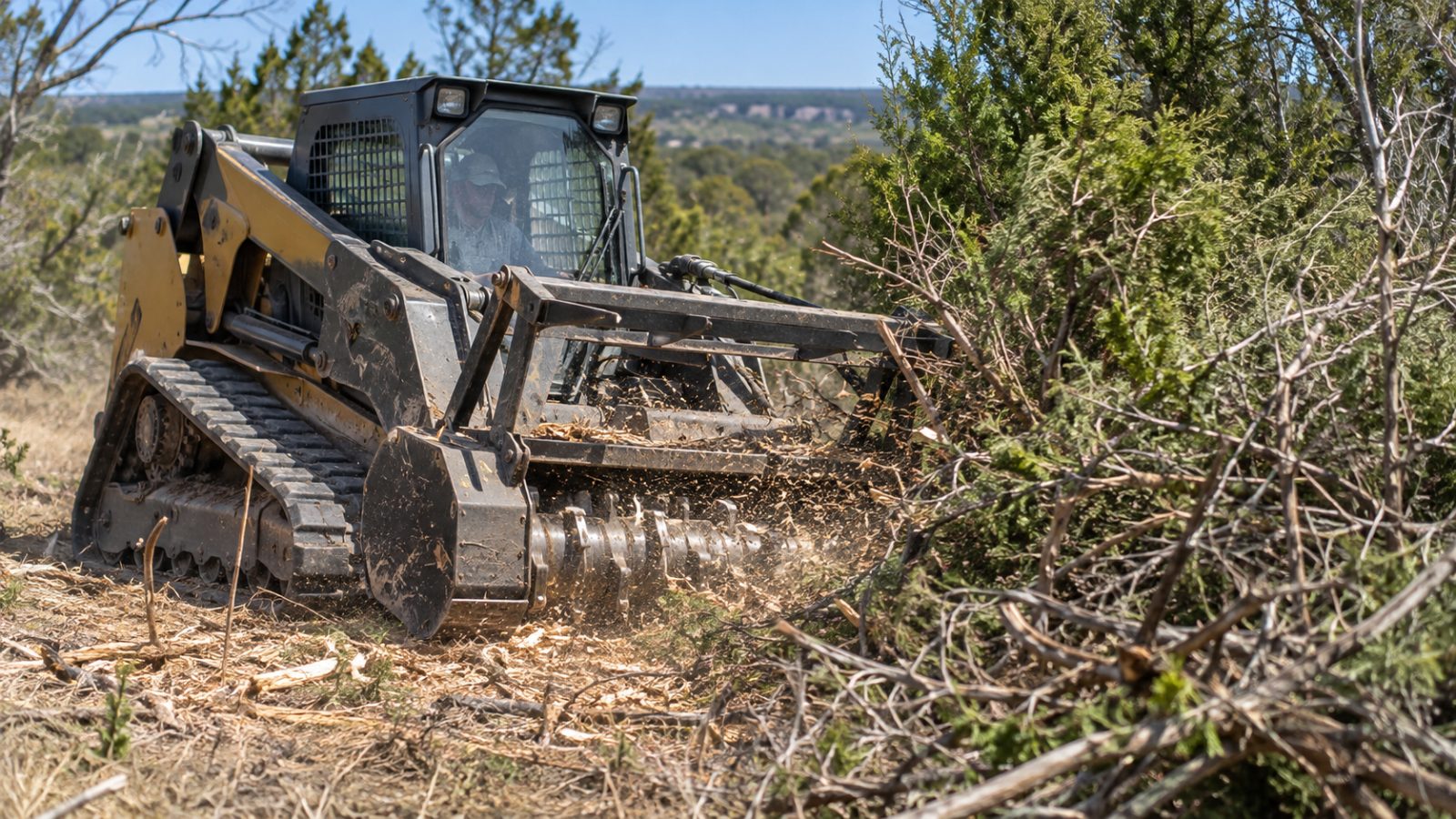
Cedar and mesquite are familiar vegetation concerns on North Texas properties. Smaller specimens and suitable woody growth may be processed with appropriate forestry mulching equipment. The ability to mulch a particular plant depends on its size, structure, location, and the capabilities of the equipment. We evaluate vegetation conditions rather than assume every cedar or mesquite tree can be handled the same way. Larger trunks, substantial stumps, and difficult ground may require another approach. The clearing plan should identify what can realistically be processed and what may remain afterward.
Selective forestry mulching focuses on reducing unwanted lower growth while retaining specific trees, natural screening, or designated vegetation. This approach may suit landowners who want to make wooded areas easier to navigate without changing the entire character of the property. Careful planning is important near mature trunks, exposed roots, fencing, and other features. We discuss preservation priorities and equipment limitations before confirming the work area. The result is intended to be a more accessible wooded space rather than a fully excavated or landscaped surface.
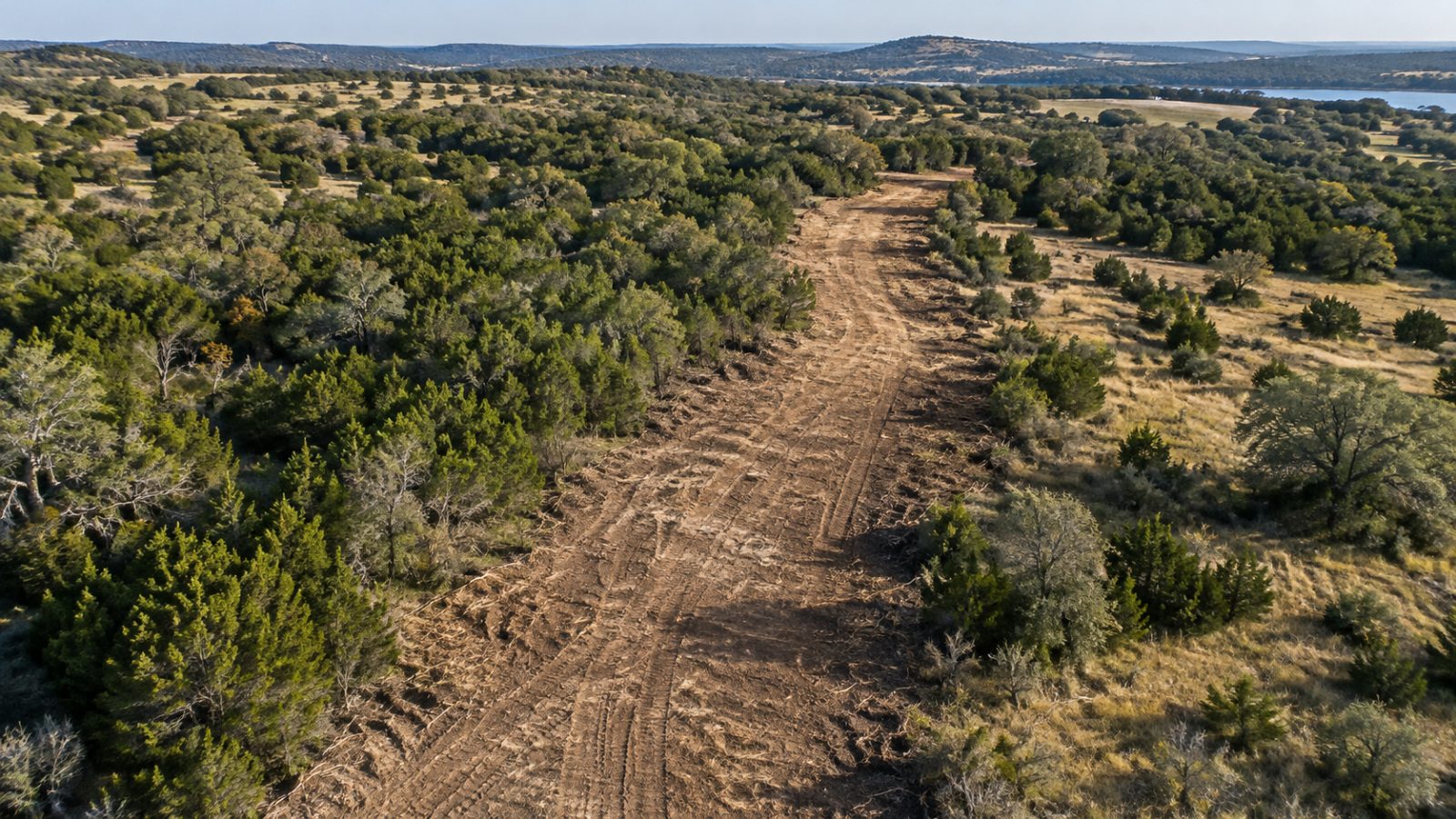
Some properties need access routes through wooded or brush-covered sections for inspections, maintenance, or future planning. Forestry mulching can be considered for opening suitable corridors where vegetation, slopes, and equipment access allow. The intended corridor width and future use influence the scope. A mulched route does not automatically become a finished road or all-weather vehicle path. Additional grading, drainage, or stabilization may be needed for more demanding uses. We help landowners understand the difference before work begins.
| Service | Estimated Cost | Average |
|---|---|---|
| Selective Forestry Mulching | Custom estimate | Varies by density |
| Wooded Acreage Mulching | Custom estimate | Varies by acreage |
| Cedar and Mesquite Mulching | Custom estimate | Varies by stem size |
| Access Corridor Mulching | Custom estimate | Varies by terrain and length |
Forestry mulching estimates depend on plant size, vegetation density, rocks, slopes, access routes, and the desired finished condition. No standard project price or market average is guaranteed.
We consider which trees and natural features should remain before defining the work area.
We explain when stem size, terrain, or obstacles may make mulching unsuitable.
We understand the practical challenges of cedar, mesquite, dense undergrowth, and rural acreage.
We explain remaining mulch, roots, and stumps before the project begins.
Looking for forestry mulching in Fort Worth or nearby North Texas communities? Request a custom estimate.
Free — no obligations
Tell us which areas need attention and which trees or features should remain.
We review woody stem size, brush density, access, slopes, rocks, and obstacles.
We define realistic mulching boundaries and expected remaining material.
Suitable vegetation is processed according to the agreed scope and site conditions.
We discuss the results, remaining vegetation, and future maintenance considerations.